
Manufacturing at Comax is not organized as a sequence of isolated processes but as a unified system.The system is governed by structure, control, and repeatability to ensure consistent execution under changing conditions.
This system is designed to support different material categories and application requirements without redefining the fundamentals of how manufacturing operates.
System Invariance
The manufacturing system is designed to remain stable even as materials, applications, and operating conditions change.
Stability is achieved through defined structure rather than reliance on individual experience or ad-hoc adjustment.
Structural Discipline
Manufacturing activities are organized according to predefined structures that guide execution and decision-making.
Repeatability First
Processes are designed to be repeatable by default, reducing variability and ensuring predictable outcomes across production cycles.
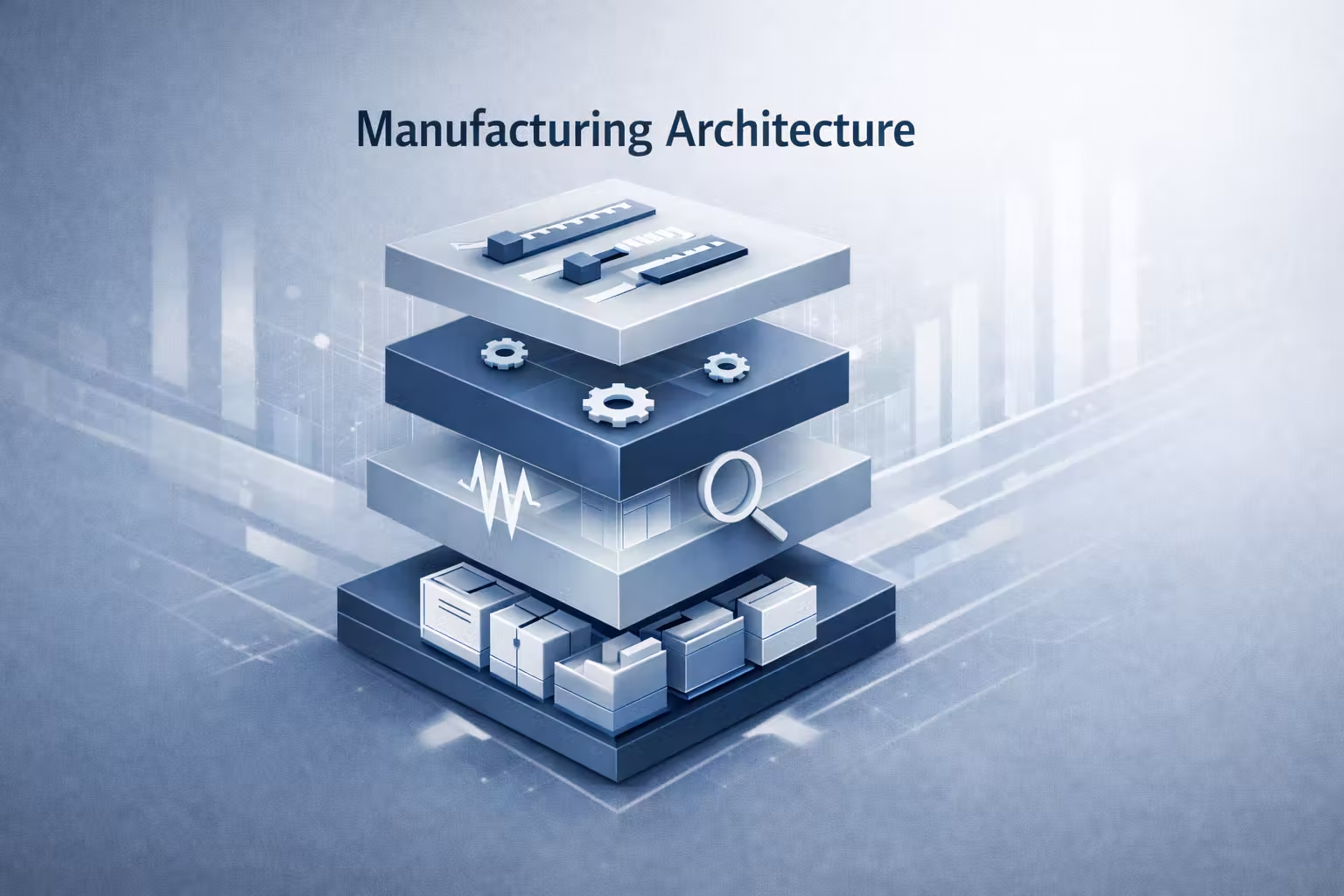
Manufacturing Architecture
Manufacturing architecture defines how inputs are controlled, how execution is governed, and how outputs are verified.
It establishes a clear separation between material qualification, process execution, and traceability.
Input Discipline
Materials entering the system are evaluated against defined criteria to ensure suitability and consistency before processing.
Execution Logic
Execution follows structured logic that governs sequencing, parameter control, and operational boundaries.
Traceability Framework
Traceability is embedded to track materials, processes, and batches throughout the manufacturing flow.
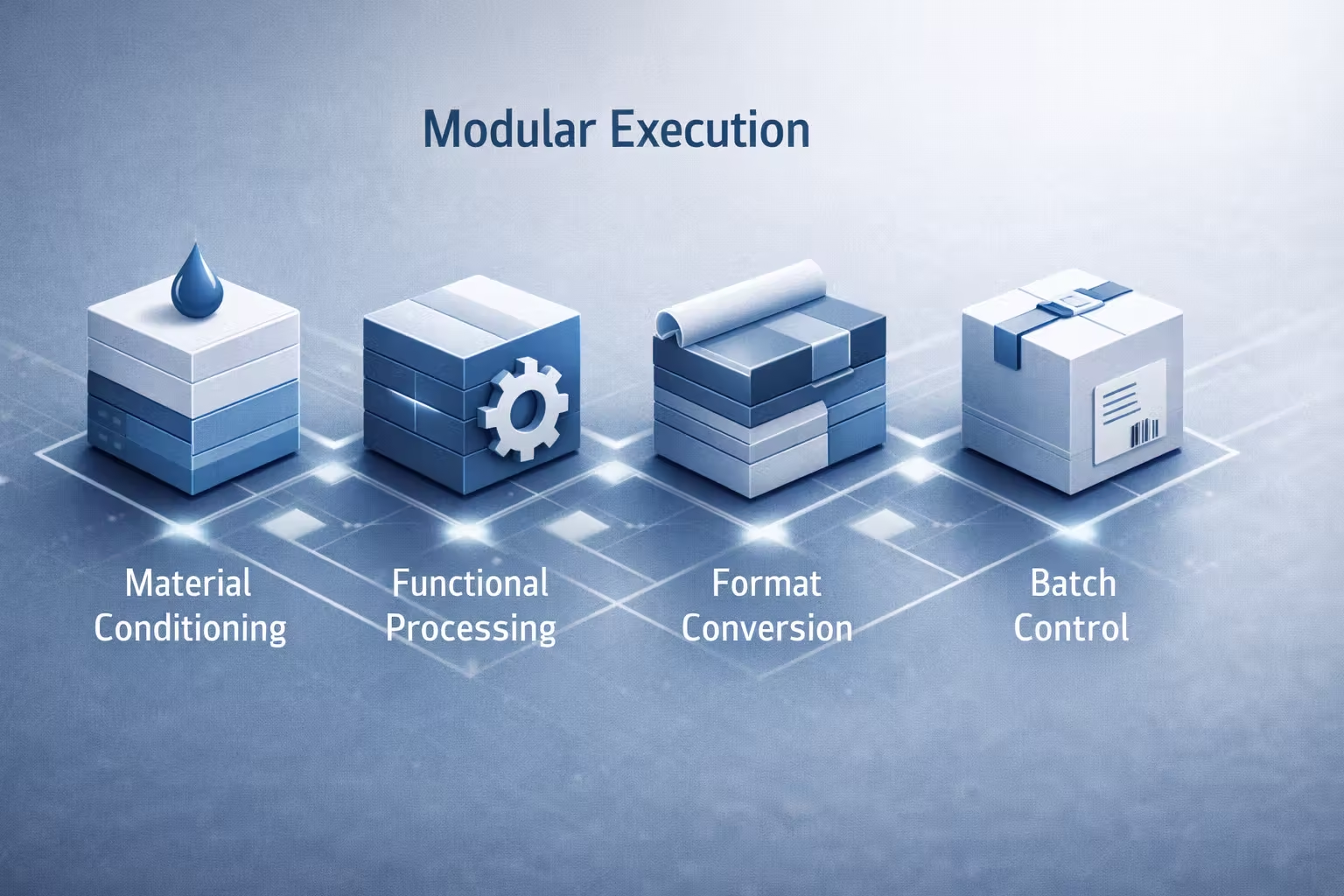
Modular Execution
Manufacturing execution is organized into modular units that can operate independently while remaining governed by the same system rules.
This modular structure enables flexibility without compromising control.
Material Conditioning
Materials are prepared and conditioned according to defined requirements prior to functional processing.
Functional Processing
Processing stages apply functional characteristics through controlled and repeatable operations.
Format Conversion
Materials are converted into required formats without altering underlying system logic.
Batch Control
Batch-level control ensures consistency and traceability across production runs.
Scalability Without Reconfiguration
The manufacturing system is designed to scale without requiring structural reconfiguration.
Capacity expansion, scope adjustment, and operational growth are accommodated within the existing system framework.
System Outcomes
Cross-industry consistency
Manufacturing outcomes remain consistent across different industries and application contexts.
Long-term supply reliability
Reliability is maintained over time through controlled execution rather than individual dependency.
Reduced operational dependency
System governance reduces reliance on individual expertise and ad-hoc intervention.